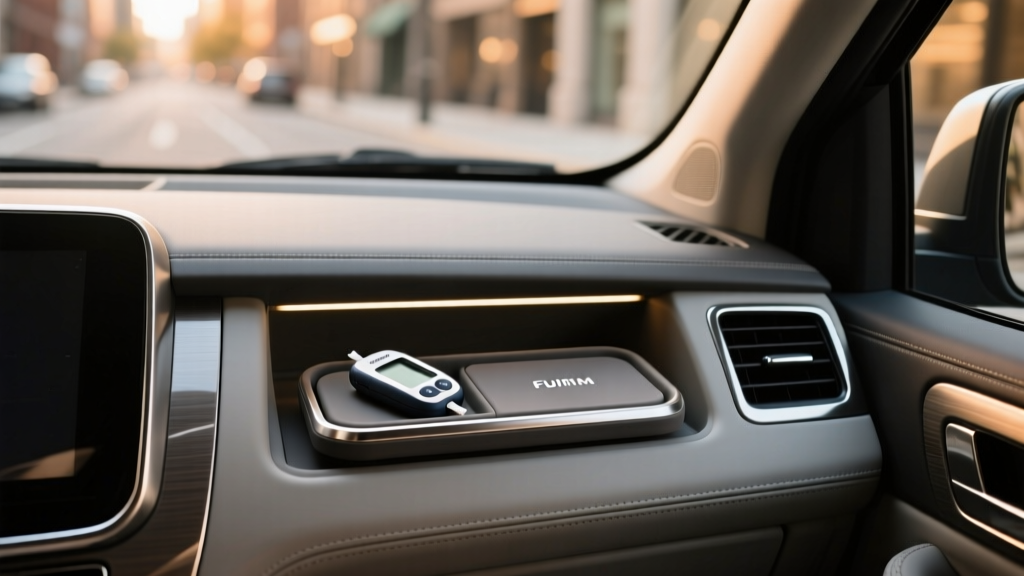
Commercial Vehicle Glucose Meter Storage (2026)
If you drive a commercial vehicle for a living?delivery van, work truck, service fleet vehicle, rideshare, or long-haul rig?your cab is more than a place to sit. It?s your mobile office, break room, and sometimes your ?home base? for hours at a time. For drivers managing diabetes, that also means the vehicle interior becomes part of your daily health routine. Where you keep a glucose meter, test strips, and other supplies can make the difference between a smooth shift and a stressful scramble at the worst possible moment.
Glucose meters and strips aren?t fragile like glass, but they are sensitive. Heat, cold, humidity, vibration, and clutter can affect accuracy, damage supplies, or simply slow you down when you need a quick reading. The goal of smart glucose meter storage in a commercial vehicle is simple: protect your gear, keep it accessible, and build a repeatable system that works across changing weather and long shifts.
This guide walks through practical storage locations, temperature control strategies, step-by-step setup, and real-world examples?so your diabetes supplies stay organized and reliable without sacrificing cab cleanliness or safety.
What You?re Storing (and Why It Needs Special Care)
Before choosing a storage spot, it helps to understand what?s in your kit and what can go wrong in a vehicle interior.
Core items most drivers carry
- Glucose meter (or continuous glucose monitor receiver if applicable)
- Test strips (often the most temperature/humidity-sensitive item)
- Lancets and lancing device
- Alcohol wipes or hand sanitizer
- Control solution (for meter accuracy checks)
- Backup batteries or charging cable
- Sharps container or travel-safe disposal option
- Fast-acting glucose (tablets/gel/juice) for lows
Common vehicle-related threats
- Heat soak: A parked vehicle in the sun can exceed safe storage temps quickly, especially dashboards and front seats.
- Freezing temps: Overnight cold can affect strip chemistry and meter performance.
- Humidity: Frequent door opening, wet gear, or spills can compromise strips if containers aren?t sealed.
- Vibration and impact: Work trucks and vans bounce. Loose meters get knocked around, dropped, or crushed under cargo.
- Cab clutter: ?Somewhere in the glovebox? turns into ?nowhere? when you?re on the clock.
Choosing the Best Storage Location in a Commercial Vehicle
The best spot depends on your vehicle type and workflow. Use the ?3 A?s? to decide: Access (reachable while parked), Accuracy (protected from temperature swings), and Accountability (a consistent home so you always know where it is).
Top storage spots (ranked by real-world practicality)
1) Center console or dedicated console organizer
For many drivers, this is the sweet spot: shaded, relatively insulated, and easy to reach during a stop.
- Best for: meter case, strips, lancets, wipes
- Pro tip: add a slim organizer tray so the meter case doesn?t fall under paperwork or cords
2) Glove box (with a protective pouch)
Glove boxes are shaded, but they can still get hot. A small insulated pouch helps buffer heat/cold and keeps supplies together.
- Best for: backup supplies, extra strips, spare batteries
- Watch out for: overstuffing?meters get crushed by manuals and registration folders
3) Under-seat storage (in a hard case)
Great for larger kits and drivers who want to keep medical items out of sight. Under-seat areas stay cooler than the dash, but can get dusty or damp.
- Best for: secondary kit, sharps container, extra supplies
- Use: a hard-shell zip case or small latching box
4) Door pocket (only for non-sensitive items)
Door pockets see frequent temperature swings and can get wet. Use them for low-risk items only.
- Best for: sealed glucose tablets, small snack, non-perishable backup
- Avoid: test strips, control solution
5) Dashboard, cupholders, or exposed trays (avoid)
These are the hottest, sunniest, and most spill-prone places in the cab. They also invite theft when visible.
Temperature and Humidity: Keeping Readings Reliable
Most glucose meter storage issues in vehicles come down to temperature. Your meter and strips typically have recommended storage ranges (check your specific brand?s insert), and a commercial cab can blow past those limits fast.
Cab heat: what happens and how to prevent it
- Dash and windshield area: can become extreme within minutes in direct sun.
- Seats and center console: still warm, but generally less severe than the dash.
- Trunk/cargo area: can also heat soak, especially in vans with limited ventilation.
Practical temperature-control strategies
- Use an insulated medical pouch as the ?first line? buffer. It won?t act like a fridge, but it slows spikes.
- Park smart: shade when possible, windshield sunshade, crack windows (where safe/legal).
- Bring the kit with you if the vehicle will sit in extreme heat/cold for extended periods.
- Keep strips sealed: cap the strip vial immediately after removing a strip.
- Avoid gel packs directly touching supplies: extreme cold spots can be just as damaging as heat. If you use a cooling pack, wrap it and separate it from strip vials.
Real-world example: summer delivery route
A parcel driver doing 80+ stops may leave the van in the sun repeatedly. Instead of keeping the glucose meter in a dashboard tray, they store it in a small insulated pouch in the center console. At lunch, they bring the pouch inside with them. Result: fewer ?strip errors,? more consistent readings, and no melted glucose gel packets.
Step-by-Step: Set Up a Vehicle Glucose Meter Storage System
Use this setup once, then maintain it with a quick weekly check. The goal is a repeatable system you can rely on even during a hectic shift.
Step 1: Build a ?driver-ready? kit and a ?backup? kit
- Driver-ready kit (daily use): meter, strips, lancets, wipes, glucose tablets/gel.
- Backup kit (emergency): extra strips, spare meter battery/charger, additional fast sugar, small snack.
Keeping two layers prevents the classic problem: you used the last strip yesterday and forgot to restock.
Step 2: Choose containers that match the environment
- For daily kit: compact zip case + insulated sleeve (or a purpose-built insulated pouch)
- For backup kit: hard case or latching plastic box to prevent crushing under seats
- For sharps: travel sharps container or a manufacturer-approved portable option (avoid loose lancets)
Step 3: Assign ?homes? inside the vehicle
- Daily kit: center console or seat-side storage pocket (shaded, reachable)
- Backup kit: glove box or under-seat box
- Fast sugar: one in the daily kit, one in an easy-to-grab spot (but not heat-exposed)
Step 4: Add a small restock routine
- Pick one day per week (or payday) to check strip count and battery status.
- Replace anything that?s expired, heat-damaged, or opened and contaminated.
- Refill glucose tablets/gel and add a snack that won?t melt easily.
Step 5: Do a quick ?heat check? before leaving supplies in the cab
If the console or glove box feels hot to the touch after parking, bring the kit with you or place it in a more insulated spot temporarily. A 10-second check can save a lot of frustration later.
Product Recommendations: What Works Well in Commercial Vehicle Interiors
Rather than focusing on a specific meter brand, these are the storage products and features that tend to work best for fleet drivers and work trucks.
1) Insulated medical pouches (best all-around)
Look for:
- Thick insulation and a light-colored exterior (absorbs less heat)
- Internal elastic loops for lancets and strip vial
- A separate pocket for wipes and small trash bags
- Room for glucose tablets without crushing strips
Best for: drivers who need to test quickly and consistently on route.
2) Hard-shell protective cases (best for under-seat storage)
Look for:
- Rigid walls and a secure zipper or latch
- Foam or padded interior to reduce vibration shock
- Enough space for a backup strip vial and batteries
Best for: work trucks, off-road routes, and vehicles that bounce or carry tools.
3) Console organizers and seat-gap organizers (best for clean access)
Look for:
- Non-slip base and dividers that keep the meter case upright
- A covered section to reduce sun exposure
- Easy wipe-clean material (spills happen)
Best for: keeping the daily kit visible to you but not exposed to sunlight.
4) Fast-acting glucose options: comparison for vehicles
- Glucose tablets: stable, low mess, easy dosing; can get chalky if left open
- Glucose gel: fast, compact; can get sticky if overheated
- Juice boxes: effective; more temperature-sensitive and prone to bursting/freezing
For most commercial vehicles, tablets are the least drama and easiest to store.
Common Mistakes to Avoid
- Leaving strips in a hot cab all day: even if the meter survives, strips can become unreliable.
- Storing supplies in the dashboard or on the seat: maximum heat and sunlight exposure.
- Mixing medical supplies with loose tools: sharp objects and heavy items crush cases and contaminate wipes.
- Not sealing the strip vial immediately: humidity can ruin strips faster than many drivers realize.
- No disposal plan: loose lancets in a door pocket is a safety hazard for you and anyone else in the vehicle.
- Relying on one kit only: a lost meter case or empty strips can derail your shift.
Safety, Cleanliness, and Cab Etiquette (Especially in Fleet Vehicles)
Commercial vehicles may be shared between drivers or inspected by supervisors. A neat storage system protects privacy and keeps the cab professional.
- Keep supplies contained: a single pouch looks cleaner than scattered items.
- Use a small trash solution: a mini trash bag for wrappers and wipes prevents mess.
- Label discreetly if shared: a simple tag inside the console organizer helps prevent accidental mix-ups without broadcasting personal info.
- Secure during driving: avoid anything that can become a projectile in sudden braking.
FAQ: Commercial Vehicle Glucose Meter Storage
Where is the best place to keep a glucose meter in a work truck or delivery van?
A shaded, easy-to-access spot like the center console is usually best. Pair it with an insulated pouch to reduce temperature swings, and keep a backup kit in the glove box or under-seat hard case.
Can heat in a parked vehicle affect glucose meter accuracy?
Yes. Extreme heat can affect strip performance and may cause error messages or inconsistent readings. If the cab feels hot to the touch, assume your supplies are at risk and bring them with you when possible.
Is it okay to store test strips in the glove box?
It can work if the glove box is not exposed to direct sun and you use a protective pouch. The bigger factor is keeping strips sealed and avoiding long exposure to high heat or humidity.
What should I keep within arm?s reach versus in a backup kit?
Within reach: meter, current strip vial, lancets, wipes, and fast-acting glucose. Backup kit: extra strips, spare batteries/charger, extra glucose, and a secondary snack.
How do I handle lancet disposal on the road?
Use a travel sharps container or an approved portable option and empty it properly at home or per local rules. Avoid tossing lancets into cupholders, door pockets, or loose bags.
What?s the quickest way to improve my current setup?
Put your daily testing items into one compact case, then place that case inside an insulated pouch stored in the center console. Add a backup strip vial and glucose tablets in a separate hard case under the seat.
Actionable Next Steps
- Pick your daily kit ?home? location today (center console is a strong default).
- Add an insulated pouch and a simple organizer so supplies don?t bounce around.
- Create a backup kit and store it separately.
- Set a weekly reminder to restock strips, check batteries, and replace anything exposed to extreme temperatures.
Your commercial vehicle interior should support your health routine, not fight it. With a consistent storage system, you?ll spend less time searching, reduce the chance of heat-damaged supplies, and keep your cab tidy and professional.
For more practical interior tips?from smart console organization to storage upgrades that make work vehicles easier to live with?explore more guides on carinteriormix.com.